



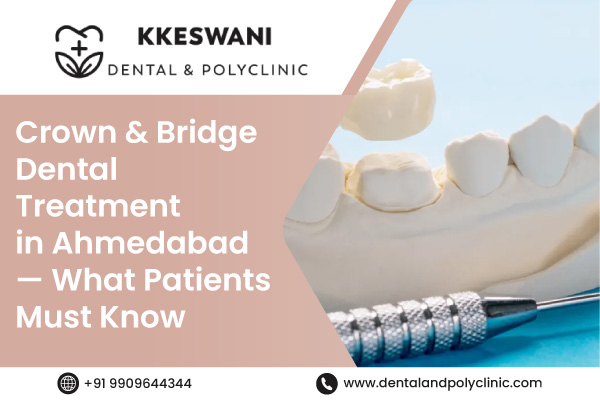
Crowns and bridges are core restorative options that restore chewing function, protect damaged teeth, and rebuild confident smiles. If you face a fractured tooth, a large cavity that compromises strength, or a missing tooth, crown and bridge treatment can be a predictable, long-lasting solution. This guide explains why clinicians recommend these restorations, what the clinical pathway looks like, how materials and digital workflow affect outcomes, and what patients should ask their dentist before committing to treatment.
For residents searching for dental crown and bridge treatment in ahmedabad or comparing crowns and bridges cost, the right information helps you choose the most clinically appropriate option and a qualified provider. Throughout this article we describe procedure steps, realistic cost drivers, maintenance strategies, and how to find the best dentist for crowns or locate dental bridge repair near me when urgent repairs are required. Kkeswani Dental & Polyclinic appears frequently in local searches for restorative dentistry and is referenced as an option for patients seeking specialised, multidisciplinary care in Ahmedabad.
What Is Crown & Bridge Treatment?
Crown: function and indications
A crown is a tooth-shaped cap that covers a damaged or weakened tooth to restore form, function, and strength. Indications include large restorations where little natural tooth remains, post-root canal restoration, fractured teeth, and aesthetic corrections.
Bridge: replacing missing teeth
A dental bridge replaces one or more adjacent missing teeth by anchoring prosthetic units to abutment teeth (or implant supports). A bridge restores occlusion, prevents neighbouring tooth drift, and re-establishes chewing efficiency.
When crowns and bridges are recommended
Dentists propose crown and bridge treatment when conservative options (like fillings) cannot reliably restore the tooth or when a missing tooth affects function or aesthetics. Treatment planning balances the patient’s oral health, bite dynamics, and long-term prognosis.
Types of Crowns and Bridges (Materials & Choices)
Common crown materials
- Porcelain-fused-to-metal (PFM): strong with good aesthetics for posterior and anterior use.
- All-ceramic / zirconia: superior aesthetics and biocompatibility; widely used for visible teeth.
- Metal alloys (gold/other): extremely durable for posterior chewing surfaces where aesthetics are less critical.
Bridge designs and supports
- Conventional fixed bridge: supported by prepared teeth on either side.
- Cantilever bridge: supported on a single abutment tooth when space or anatomy restricts support.
- Implant-supported bridge: preferred when adjacent teeth are healthy; avoids preparing natural teeth.
Material choice impacts longevity and price
Material selection affects how the restoration wears, how natural it looks, and crowns and bridges cost. High-translucency zirconia often costs more but offers excellent aesthetics, while metal-based options may cost less and last longer in high-load areas.
Step-by-Step: What to Expect During Treatment
- Consultation and diagnostics: The process begins with a clinical exam, digital X-rays, and digital impressions or scans to evaluate tooth structure, bone levels, and occlusion. A clear treatment plan is presented with options and cost estimates.
- Tooth preparation and impression: For tooth-supported bridges, the abutment teeth are shaped to accept crowns. Digital or conventional impressions are taken and temporary restorations placed to protect prepared teeth while the final prosthesis is fabricated.
- Laboratory fabrication and trial: Modern labs use CAD/CAM technology to mill ceramic or zirconia crowns with precision. Try-in appointments allow adjustments for fit, colour and bite before final cementation.
- Final cementation and occlusion check: Once fit and aesthetics satisfy both clinician and patient, the crown or bridge is permanently cemented, and occlusion (bite) is verified. Post-operative care instructions are provided.
Benefits, Features & Importance (Industry-Relevant, Product-Focused)
Functional benefits
- Restores chewing efficiency and speech patterns.
- Protects weakened teeth from further fracture.
- Prevents adjacent teeth from shifting into the gap.
Aesthetic and psychological benefits
- Recreates natural tooth form, colour and smile symmetry.
- Supports facial structure and boosts patient confidence.
Clinical features that matter when choosing treatment
- Precise marginal fit to reduce microleakage and recurrence of decay.
- Use of biocompatible materials to reduce gum inflammation.
- Digital planning and implant options for better long-term prognosis.
Why this matters to patients and practices
Good dental crown and bridge treatment balances clinical predictability and patient comfort. From an operational view, predictable restorative outcomes reduce the need for retreatments and improve patient satisfaction metrics — a core performance indicator for clinics like Kkeswani Dental & Polyclinic.
Typical price ranges and realistic expectations
Prices can range widely. Single crowns may be modestly priced, while multi-unit bridges and implant-supported prostheses increase total cost. When comparing crowns and bridges cost, request an itemised quote that lists fabrication, clinical time, and any preparatory treatments.
Why Choose Kkeswani Dental & Polyclinic for Crown & Bridge Work
Kkeswani Dental & Polyclinic blends restorative precision with patient-centred care: our specialists plan each crown and bridge treatment using digital diagnostics, contemporary materials and a stepwise clinical protocol to deliver predictable, aesthetic results. The team’s commitment to clear communication and long-term follow-up gives patients confidence during treatment and beyond. Kkeswani Dental & Polyclinic supports cases from simple crowns to implant-supported bridges and offers patient education to protect your investment.
Conclusion
Crowns and bridges are proven restorative solutions that restore function, protect compromised teeth and renew aesthetics. Selecting the right material, choosing a clinician with restorative expertise, and following a disciplined maintenance routine are the three pillars of long-term success. When evaluating crown and bridge treatment in Ahmedabad, prioritise clinics that provide transparent treatment plans, material disclosures, and documented clinical experience. Patients who proactively ask about alternatives, lab processes and aftercare typically achieve the most durable and natural outcomes. If you need repair or a full rehabilitation, a thoughtful, evidence-based approach will preserve oral health and deliver a confident smile.
Call +91 9909644344 or email to Book Your Appointment Today at Kkeswani Dental & Polyclinic for expert dental crown and bridge treatment in Ahmedabad.
FAQs
How long does a typical crown and bridge treatment take from start to finish?
Treatment time varies with complexity. Conventional tooth-supported crowns or bridges usually require 2–3 visits over 2–4 weeks (preparation, lab fabrication, cementation). Implant-supported bridges involve surgical stages and healing time, which extends the timeline to several months. Kkeswani Dental & Polyclinic maps the full schedule at the initial consultation, so patients understand timing and milestones.
What affects the quoted crowns and bridges cost I receive at different clinics?
Quotes vary because of material selection (zirconia vs PFM), laboratory fees, number of units, preparatory procedures (root canal, posts), and whether an implant is needed. High-precision CAD/CAM workflows and premium ceramics typically raise costs but can improve aesthetics and fit. Ask for a written cost breakdown and prosthetic warranty.
Can a damaged bridge be repaired or must it be remade?
Minor issues — loose crowns or broken acrylic pontics — may be repaired chairside or in the lab. Significant structural failure, recurrent decay, or compromised abutments often require remaking the bridge. If you search dental bridge repair near me, seek clinics that evaluate both conservative repair and definitive replacement options.
Which key aspects should guide my choice when looking for the best dentist for crowns or the best dentist for teeth crown & bridges?
Look for demonstrable prosthetic experience, before-and-after cases, clear explanations of material options, and use of modern diagnostics (digital scans, occlusal analysis). The best dentist for crowns explains risks, alternatives and maintenance. Kkeswani Dental & Polyclinic provides restorative portfolios and treatment planning consultations to support informed decisions.
Is an implant-supported bridge always better than a tooth-supported bridge?
Not always. Implant-supported bridges avoid preparation of healthy adjacent teeth but require sufficient bone and surgical readiness, with higher upfront cost. Tooth-supported bridges can be efficient when abutment teeth already need crowns. The optimal choice depends on oral health, adjacent tooth status, long-term maintenance expectations and cost considerations; a detailed diagnostic workup will identify the right path.